CVSA Passenger Documentation Rules for Truckers 2026
CVSA passenger authorization documentation refers to the written proof a motor carrier must issue before a driver transports a non-employee passenger in a commercial motor vehicle. Under 49 CFR 392.60, that authorization must exist, but current FMCSA guidance does not require a driver to carry it in the cab.
That gap between “must exist” and “must be produced roadside” is the entire reason this topic is generating search traffic right now. CVSA petitioned FMCSA in June 2026 to close it. As of this writing, the petition has not been adopted, and the underlying rule has not changed.
What 49 CFR 392.60 Actually Requires

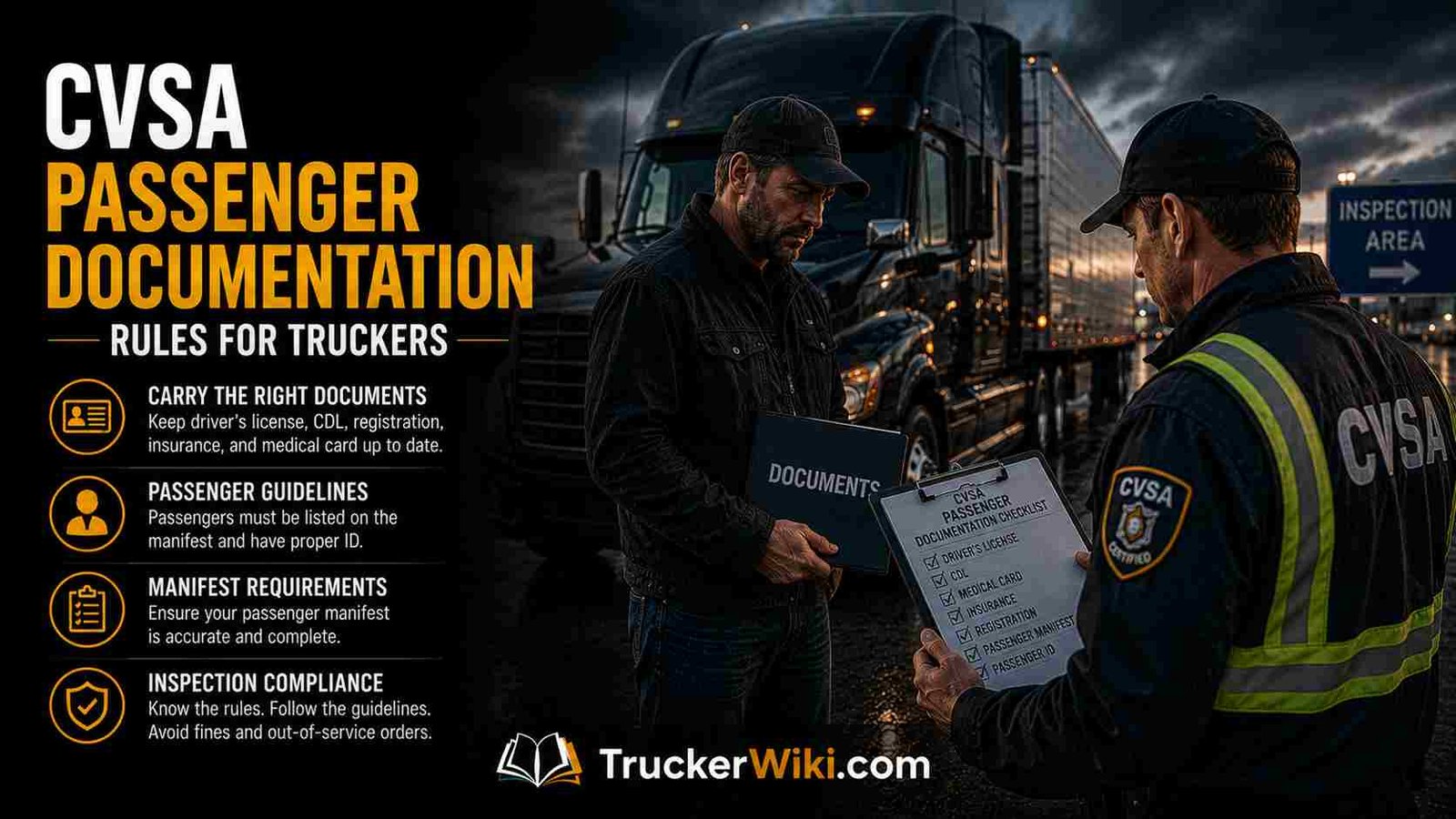
Section 392.60(a) states that no driver may transport a person, or permit a person to be transported, in a commercial motor vehicle other than a bus unless the motor carrier has specifically authorized it in writing. The regulation is specific about what that written authorization has to contain: the name of the person being transported, the points where the transportation begins and ends, and the date the authorization expires.
This applies to anyone who isn’t part of the carrier’s normal driving operation. A spouse, a friend, a trainee’s family member, or a ride-along visitor all fall under this requirement regardless of trip length. TruckerWiki’s owner-operator authority guide covers the broader documentation drivers running their own authority need to maintain, and this authorization requirement applies to owner-operators the same way it applies to company drivers carrying passengers on behalf of a carrier.
Three categories of passengers do not require written authorization under 392.60(a)(1) through (3): employees or other persons already assigned to the commercial motor vehicle by the motor carrier, anyone being transported because aid is being rendered during an accident or other emergency, and an attendant assigned to care for livestock in transit.
A trainer riding with a student driver under a formal training assignment typically falls under the first exception because the carrier itself made the assignment. A hitchhiker picked up after a breakdown does not qualify under any of the three, since the emergency exception covers rendering aid during an accident, not general roadside assistance to a stranger.
The rule carves out an additional exemption for farm vehicles. Section 392.60(b) states that the section does not apply to commercial motor vehicles controlled and operated by a farmer and used to transport agricultural commodities or supplies, which removes passenger authorization requirements from a narrow slice of agricultural operations.
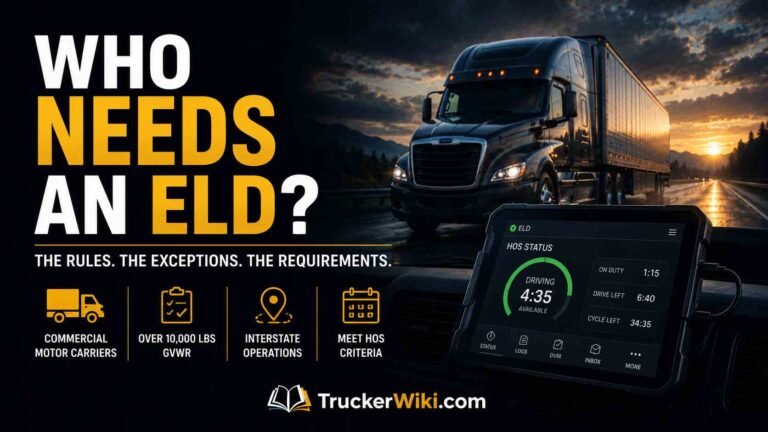
Whether 392.60 applies at all depends on the vehicle meeting the federal definition of a commercial motor vehicle. That threshold is a gross vehicle weight rating, gross combination weight rating, gross vehicle weight, or gross combination weight of 10,001 pounds or more, or a vehicle designed to transport more than 8 passengers for compensation, or more than 15 passengers when compensation is not involved, or any vehicle transporting hazardous materials in a quantity that requires placarding. A driver operating below all of these thresholds is not subject to 392.60, though state-level passenger rules can still apply and vary by jurisdiction.
The exception for company-assigned personnel deserves closer attention because it’s the one most frequently misapplied. Carriers typically document the assignment through a dispatch record, a training program enrollment, or an internal roster rather than a standalone authorization letter, and that documentation still needs to exist somewhere even though the format differs from the passenger authorization described in 392.60(a).
A driver who assumes a coworker riding along is automatically covered under this exception without confirming the carrier actually assigned that person to the vehicle is taking on risk the exception was never designed to cover.
Does a Driver Have to Carry the Authorization at Roadside?
FMCSA answered this directly in a Guidance Q&A issued April 4, 1997, and effective May 4, 1997. The question posed to the agency was whether 392.60 requires a driver to carry a copy of the written authorization on board the CMV. FMCSA’s guidance is unambiguous: no, the authorization must be maintained at the carrier’s principal place of business. The agency’s guidance adds that a motor carrier can, at its own discretion, require a driver to also carry a copy, but nothing in federal regulation forces that outcome.
This creates a specific problem at roadside inspections. An inspector who finds a passenger in a property-carrying CMV has no federal mechanism to confirm, on the spot, whether that passenger is authorized. The driver’s word and the passenger’s word are the only information available unless the carrier’s office is reachable and open. If the trip happens overnight or on a weekend, verification by phone may not be possible at all.
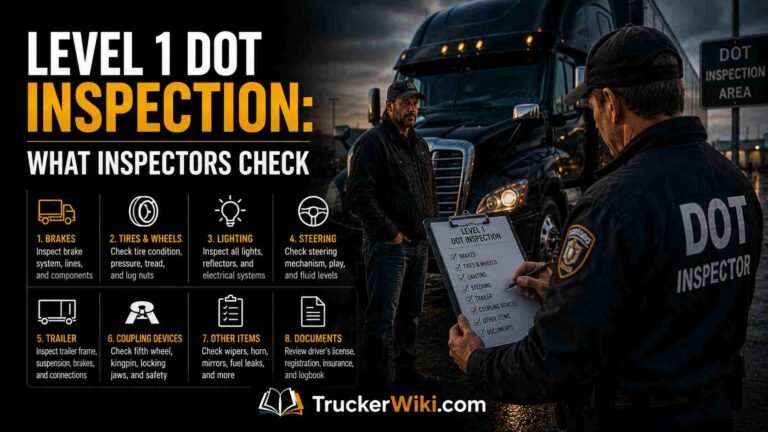
That verification gap is not hypothetical to enforcement agencies. It is the specific justification CVSA used when it asked FMCSA to change the guidance, and it connects directly to the human trafficking detection mission FMCSA has built into its Our Roads, Our Safety program. Roadside inspectors are trained to recognize trafficking indicators during Level I and Level II inspections, and an unverifiable passenger is one of the signals inspectors are told to watch for.
An inspector who cannot verify a passenger’s status on the spot still has options short of an outright violation. The officer can attempt to call the carrier’s dispatch office directly, ask the driver to produce whatever documentation exists even though nothing compels it, or simply note the presence of an unverified passenger in the inspection report while allowing the vehicle to continue.
None of those options resolve the underlying problem CVSA has flagged: the outcome depends entirely on whether the carrier’s office happens to be reachable at that moment, not on a document the driver can hand over directly.
The CVSA Petition: What Would Change and What Hasn’t Yet
This is CVSA’s third attempt at the same regulatory change, not its first. CVSA filed its original petition, citing 49 CFR 389.31 as its authority to petition, on February 3, 2023, asking FMCSA to amend the DOT Regulatory Guidance to 392.60 to require written or electronic documentation of passenger authorization.
FMCSA denied that petition. CVSA resubmitted an updated version addressing FMCSA’s stated objections on November 8, 2024. FMCSA’s underlying position did not change between the two rounds, so CVSA followed up again with a June 29, 2026 letter that responds point by point to the agency’s reasoning.
The core disagreement across all three rounds is the same. FMCSA’s denial rested partly on the fact that 392.60 does not specify where the authorization document must be maintained, so the agency defaults to the general FMCSR requirement that certain records be kept at the carrier’s principal place of business rather than in the vehicle.
CVSA’s June 29 letter responds directly to a second FMCSA objection: that passenger authorization documents can be forged. CVSA’s counterargument is that the FMCSRs already require dozens of documents to be carried and produced roadside despite the same forgery risk, including a driver’s license itself, and that the possibility of a falsified document has never been treated as sufficient reason to eliminate a roadside documentation requirement elsewhere in the regulations.
As of August 2026, FMCSA has not issued a proposed rule in response to the petition. Nothing in current federal regulation requires a driver to carry the authorization in the cab. Drivers and carriers should treat the following comparison as the current state versus a proposed state, not as two competing current rules.
| Current rule (49 CFR 392.60 + 1997 guidance) | CVSA’s proposed rule (2026 petition, not adopted) | |
|---|---|---|
| Written authorization required from carrier | Yes | Yes, unchanged |
| Authorization must be carried in-cab | No | Yes |
| Authorization must be produced to an inspector on request | No | Yes |
| Where authorization must be kept | Carrier’s principal place of business | Carrier’s principal place of business, plus a copy in the vehicle |
| Format allowed if adopted | Not applicable | Paper or electronic copy |
A granted petition would not translate into an immediate rule change. FMCSA would still need to issue a Notice of Proposed Rulemaking, open a public comment period, review the comments received, and publish a final rule with its own effective date before drivers or carriers would be legally required to comply.
That process routinely takes well over a year from a granted petition to a final rule taking effect, so even a favorable FMCSA response to the June 2026 letter would not create a new carry-in-cab requirement in the near term. CVSA’s petition specifically requested that FMCSA update its human trafficking training for inspectors alongside any rule change, so that inspectors understand how to use the authorization document as one input among several rather than treating its absence alone as proof of trafficking.
Some fleets have already moved ahead of the regulation on their own. Carriers that operate rider-along or spousal-travel policies frequently generate authorization records inside their ELD or fleet management platform and make that record retrievable by the driver during a stop, independent of whether federal law requires it. That practice would satisfy CVSA’s proposed rule today even though nothing currently obligates a carrier to adopt it.
What an Unauthorized Passenger Violation Costs You Today
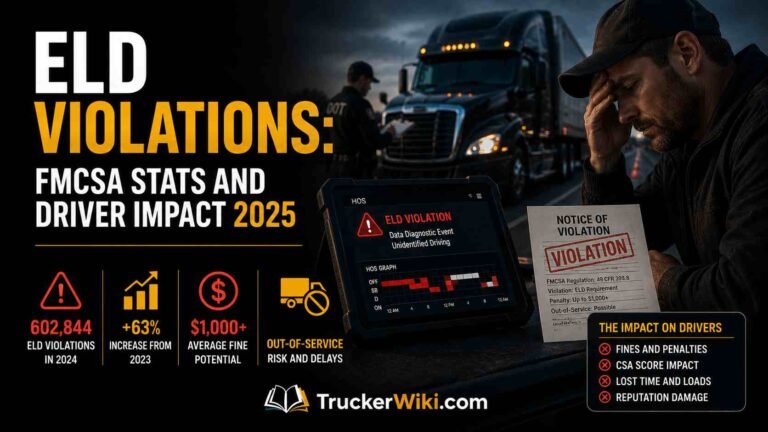
An unauthorized passenger finding at roadside is cited under 392.60(a)-D in FMCSA’s Safety Measurement System, filed within the Unsafe Driving BASIC. FMCSA’s own violation severity data lists this violation at a severity weight of 1, the lowest weight FMCSA assigns on its severity scale.
That is a meaningfully different picture than what circulates on some compliance blogs, where the violation is sometimes described as carrying a 10-point severity weight. That higher figure appears to conflate this violation with the unrelated 392.82(a)(1) handheld-phone violation, which does carry a 10-point weight.
Drivers researching this topic should rely on FMCSA’s published SMS violation data rather than secondary compliance sites when the two disagree, since FMCSA’s own carrier-level SMS records are the primary source and consistently show the weight at 1.
A severity weight of 1 does not mean the violation is inconsequential. Every roadside violation, regardless of weight, becomes part of the driver’s inspection history and contributes to the carrier’s Unsafe Driving BASIC percentile under FMCSA’s Safety Measurement System.
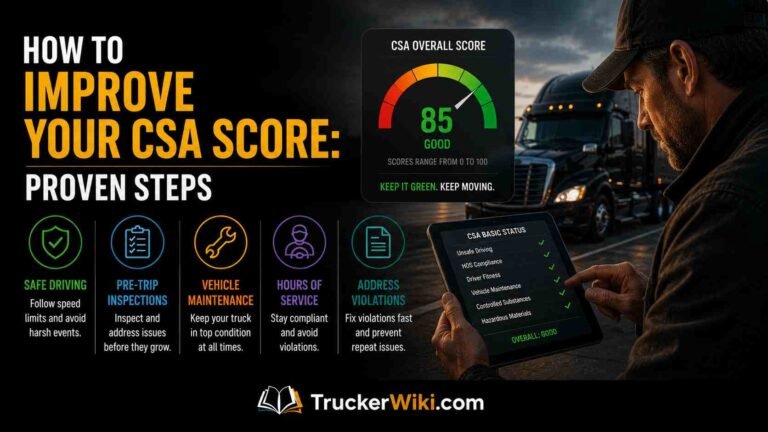
TruckerWiki’s guide to how CSA scores affect your career covers how individual violations accumulate into a carrier’s public safety percentile over a rolling 24-month window, and a driver who repeatedly triggers this violation across multiple inspections creates a pattern that shows up in that calculation even if any single citation carries a low weight on its own.
Beyond the CSA impact, an unauthorized passenger finding carries practical consequences that don’t show up in a severity number. Inspectors can detain the vehicle while the authorization question is resolved, which stops the load and the clock on the driver’s trip.
A carrier’s insurance policy may not extend coverage to an unauthorized passenger if that passenger is injured during the trip, which shifts liability exposure onto the driver and carrier in ways that have nothing to do with FMCSA enforcement. TruckerWiki’s guide to improving your CSA score outlines how to prevent low-severity violations like this one from stacking into a larger pattern across a fleet’s inspection record.
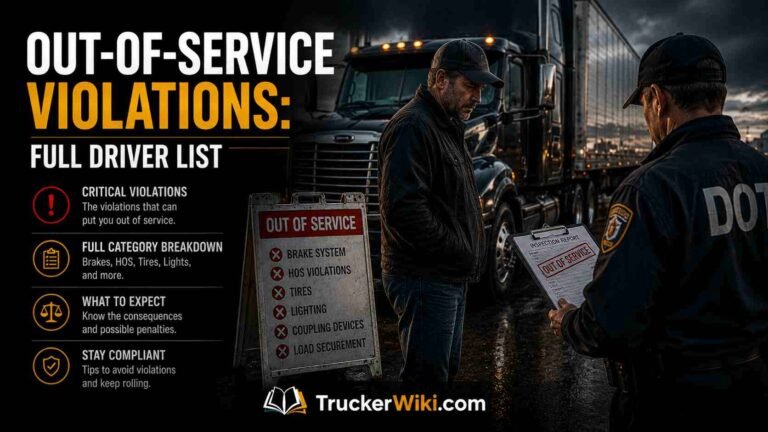
An unauthorized passenger citation by itself does not place a driver out of service. Out-of-service criteria under 49 CFR Part 396 target conditions that create immediate safety or compliance risk, such as an expired medical certificate or a disqualified CDL, and an unauthorized passenger finding does not meet that bar on its own.
The violation still appears on the Driver Vehicle Examination Report and becomes part of the carrier’s permanent SMS history regardless of whether the vehicle continues its trip that day. A driver who assumes a low severity weight means no lasting record is drawing the wrong conclusion; the citation shows up in the same public-facing SMS profile as every other violation type, low weight or high, for the full 24-month lookback window.
The insurance exposure carries the most direct financial consequence. Commercial auto liability policies are written around the carrier’s declared operations, and a passenger who was never authorized falls outside what many policies define as a covered occurrence. If that passenger is injured in a crash, the carrier’s insurer can dispute the claim on the basis that transporting the passenger violated both federal regulation and the carrier’s own policy terms, which pushes the liability question into a coverage dispute at exactly the moment a driver and carrier need coverage to apply without complication.
Practical Steps for Drivers Carrying a Passenger
Nothing in federal law currently requires a driver to carry the authorization in the truck, but nothing prevents a carrier from asking for it, and drivers have practical reasons to keep a copy accessible regardless of what FMCSA eventually decides on the CVSA petition.
A written authorization that satisfies 392.60(a) needs three specific pieces of information: the passenger’s full name, the exact points where the transportation begins and ends, and the date the authorization expires. A blanket authorization with no expiration date or a vague description of the trip does not meet the regulatory standard even if the carrier intended it to.
Drivers who regularly carry a spouse, family member, or other approved rider should ask their carrier to issue a standing authorization that names the trip pattern explicitly rather than relying on a verbal understanding with dispatch.
A text message or a phone call giving informal approval is not the written authorization the regulation describes, and it will not satisfy an inspector asking about a passenger even under the current rule that doesn’t require the document to be produced roadside, because the underlying written authorization still has to exist somewhere in the carrier’s records.
A single-trip authorization needs the passenger’s full legal name, the specific origin and destination points for that trip, and an expiration date tied to the trip’s actual duration. An open-ended expiration date, or one written months past the actual trip, weakens the document’s value even though 392.60 doesn’t specify a maximum authorization length.
Carriers running frequent rider-along programs, such as spousal travel policies common among owner-operators and small fleets, typically issue a rolling authorization that covers a defined date range rather than reissuing paperwork for every individual trip, which satisfies the same three data points while cutting down on the administrative load for dispatch.
Drivers switching carriers or leasing on to a new authority should not assume a prior employer’s passenger authorization transfers with them. Each authorization is issued under the authority of the specific motor carrier operating the vehicle, so a new lease-on arrangement requires a new authorization even if the passenger and the trip pattern are identical to what the driver carried under the previous carrier.
Carrying a copy of the authorization voluntarily, whether on paper or saved to a phone, costs a driver nothing and removes the entire question from a roadside stop before it becomes one. If FMCSA eventually adopts CVSA’s proposed rule, drivers who already carry the document will have nothing to change.
If the petition stalls the way it did after the 2023 filing, drivers who carry it anyway have simply removed one point of friction from every inspection where a passenger is present, without waiting on a rulemaking process that has already gone unresolved twice before.