Elderly Trucker Financial Hardship: 2026 Data
Elderly truckers’ financial hardship is driven by low retirement savings among long-haul drivers, a workforce that has aged from 42 to 47 on average since 1995, and take-home pay that has not kept pace with what retirement actually costs. Industry survey data from 2025 shows most drivers over 55 have not saved enough to stop working, and many say they cannot afford to.
The pattern is not new, but it has gotten sharper. Baby Boomers still make up roughly a fifth of the driver workforce, and the industry’s own surveys show a majority of drivers approaching Medicare age with no clear retirement date and no savings cushion to fall back on.
How Old Is the Average Truck Driver Today
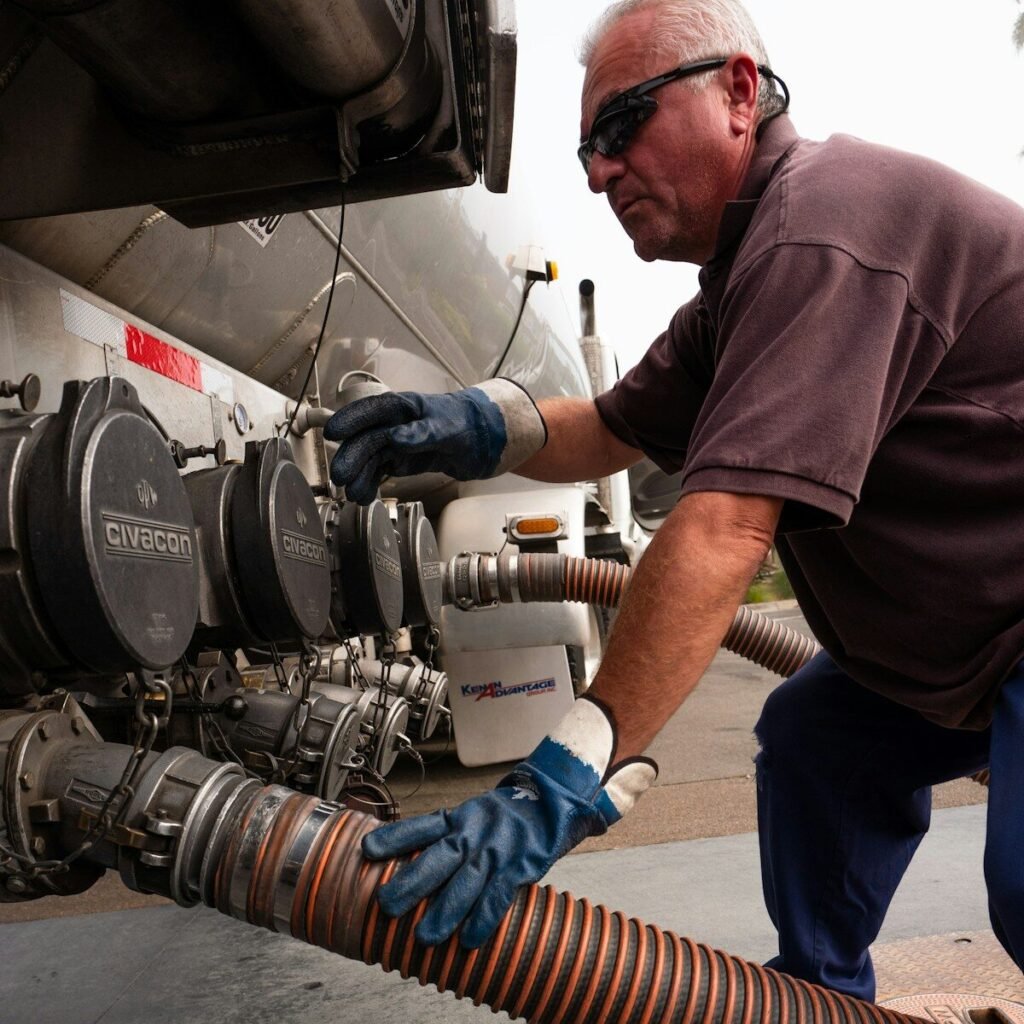
Government data puts the average truck driver at 47 years old as of 2024, up from 42 in 1995, according to the American Transportation Research Institute’s demographic study. Baby Boomers account for 20.7% of the workforce, and Gen X holds the largest single share at 40.8%, meaning roughly two-thirds of drivers on the road are over 45.
Industry surveys of working drivers skew even older than the government figures. CCJ’s 2025 What Drivers Want survey, conducted with Netradyne, found an average respondent age of 59.5, with 71% of respondents having spent more than 20 years in the industry.
That gap between the government’s workforce-wide average and the survey’s self-selected respondent pool reflects a simple reality: long-tenured drivers are the ones still driving, because newer entrants leave the occupation faster than veterans do.
The employment classification shift compounds the age issue. Owner-operators and independent contractors have grown 67% since 2003 to more than 500,000 nationally, per ATRI. Independent drivers carry their own retirement planning entirely, with no employer plan to opt into at any age.
Why Most Drivers Haven’t Saved Enough
CCJ’s Nov 2025 survey found that 67% of respondents have not saved enough money to stop working, despite nearly 70% saying they are actively trying to save. “Needing money” was cited by 36% of drivers as the top reason they don’t plan to retire, ahead of “liking the job” at 28%.
The gap between saving and having enough shows up in driver comments collected in the same survey. Texas-based company driver Brad Morgan described living “paycheck to paycheck” with “nothing left over to save.” Wisconsin-based owner-operator Keith Frederickson, more than three decades on the road, said rising costs meant he was “just trying to stay afloat,” not building a retirement fund.
This isn’t a motivation problem. Only 10% of company drivers cited employer health insurance as a reason to keep working, meaning the retirement gap isn’t being closed by benefits packages either. The shortfall is structural: income volatility, high operating costs for owner-operators, and years spent in a career with historically thin retirement infrastructure compared to salaried white-collar work.
What Trucker Pay Actually Covers Versus What Retirement Needs
The median annual wage for heavy and tractor-trailer truck drivers was $57,440 in May 2024, according to the Bureau of Labor Statistics. The bottom 10% of drivers earned less than $38,640 that year. At the median wage, a driver following the common guideline of replacing 70-80% of pre-retirement income would need roughly $40,000 to $46,000 a year in retirement.
| Income level (BLS, May 2024) | Annual wage | Estimated 75% income replacement need |
|---|---|---|
| Bottom 10% | Under $38,640 | ~$29,000/year |
| Median | $57,440 | ~$43,000/year |
| Top 10% | Over $78,800 | ~$59,000/year |
Social Security replaces only part of that gap, and the replacement rate depends heavily on when a driver claims. Full retirement age is now 67 for anyone born in 1960 or later. Claiming at 62, the earliest age allowed, permanently cuts the monthly benefit by 30% compared with waiting until full retirement age, per the Social Security Administration. Waiting until 70 instead adds delayed retirement credits worth roughly 8% per year, which is exactly the math many drivers can’t afford to act on if they need income now.
For owner-operators, the math is worse before it’s better. Operating costs (fuel, insurance, maintenance, truck payments) come out of gross revenue before anything reaches personal savings, and the same ATRI data showing 500,000-plus independent operators reflects a growing share of the workforce carrying that cost structure without an employer retirement match of any kind.
Why Drivers Keep Driving Past Typical Retirement Age
Financial necessity is the largest driver of delayed retirement, but it isn’t the only one. CCJ’s survey found that 28% of drivers who don’t plan to retire soon say it’s because they like the job, not purely because they need the paycheck. Job satisfaction scores in the same survey were relatively high: 44% of drivers rated their company culture 8 or higher on a 10-point scale.
The Social Security claiming mechanics reward waiting, which pushes some financially strained drivers to keep working past 65 or 67 even when the job is physically demanding. A driver who claims at full retirement age receives their full primary insurance amount; delaying further, up to age 70, increases that monthly payment for the rest of their life, per SSA. For a driver without a pension or employer 401(k) match, that built-in incentive to delay claiming and delaying retiring lines up directly with financial necessity, not against it.
Medicare eligibility at 65 is a separate factor entirely from Social Security’s full retirement age, and CCJ’s survey specifically noted its respondent pool was, on average, just over five years from qualifying for Medicare. Drivers without employer-sponsored health coverage sometimes keep working specifically to bridge that gap.
Financial Assistance Options for Truckers in Hardship

Charitable relief funds exist for truckers, but most are built around acute medical or injury-triggered hardship, not general retirement income support. The St. Christopher Truckers Relief Fund provides financial assistance to Class A CDL over-the-road drivers when illness or injury forces them out of work, covering expenses like rent, utilities, and vehicle loans.
That is meaningfully different from the slow-building, decades-long shortfall described in this data. A driver who has simply never saved enough does not typically qualify for illness-based relief funds.
Drivers researching their own options are better served starting with primary retirement mechanics: verifying their Social Security earnings record and estimated benefit through SSA’s own tools, and for independent operators, evaluating a Solo 401(k), which is structured specifically for self-employed individuals and allows both employee and employer-side contributions in the same plan.
Neither of these paths solves an immediate cash shortfall, but they address the structural gap this data points to rather than the acute crisis that charitable relief funds are designed for.