HOS Rules: Property vs Passenger Drivers Compared
Property and passenger CMV drivers follow different HOS rules. See how 49 CFR 395.3 and 395.5 compare on driving limits, breaks, restarts, and more.

Property and passenger CMV drivers follow different HOS rules. See how 49 CFR 395.3 and 395.5 compare on driving limits, breaks, restarts, and more.
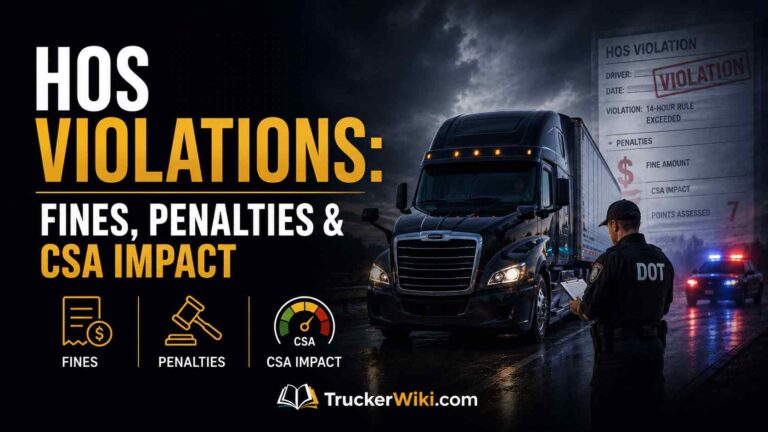
HOS violations carry up to $19,246 per violation for carriers in 2026. See the full fine schedule, OOS thresholds, and CSA scoring impact explained.
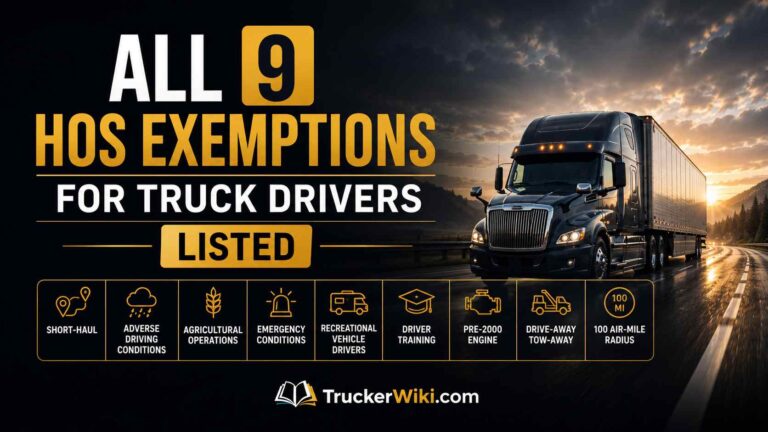
All 9 HOS exemptions under 49 CFR 395.1 explained: short-haul, agricultural, oilfield, adverse driving, emergency conditions, and more with key limits.
The adverse driving conditions exemption extends your 11-hour and 14-hour limits by 2 hours for unexpected weather or road events. Learn what qualifies.
The short-haul exemption waives ELD, logs, and the 30-min break for drivers within 150 air miles. See both 395.1(e) provisions and qualifying conditions.
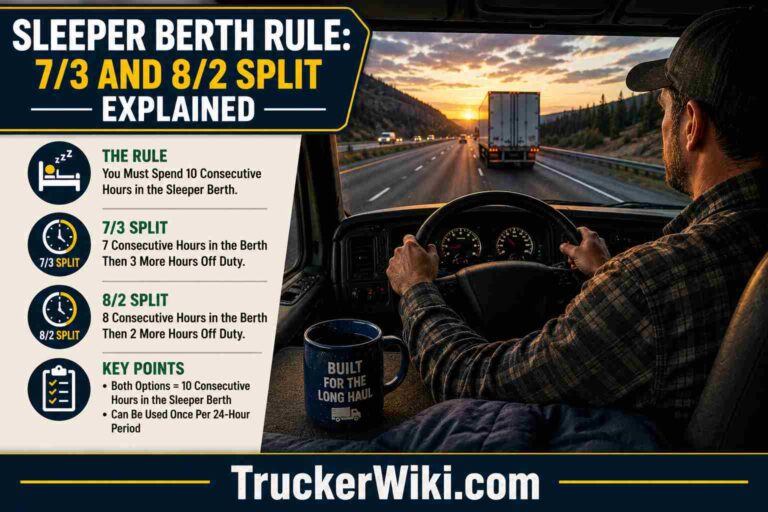
The sleeper berth rule lets CMV drivers split 10 hours off duty into 7/3 or 8/2 periods. Learn how the 14-hour clock recalculates and what qualifies.
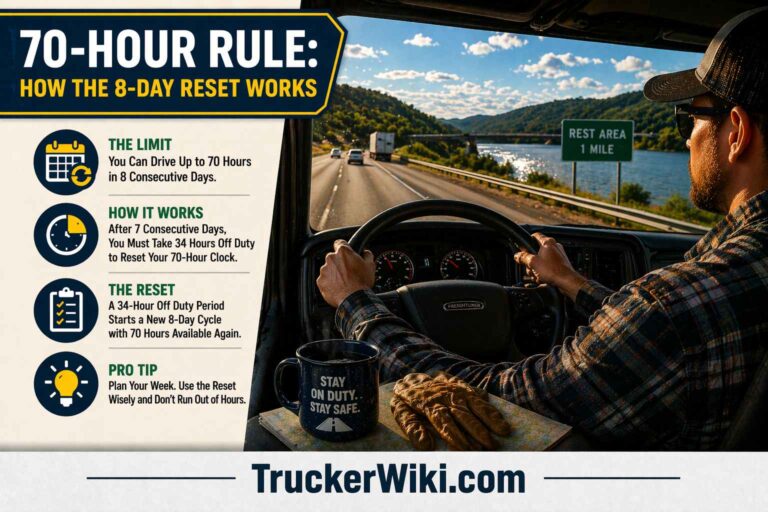
The 70-hour rule caps CMV drivers at 70 on-duty hours over 8 rolling days. Learn how the 34-hour restart, recap method, and ELD tracking work.
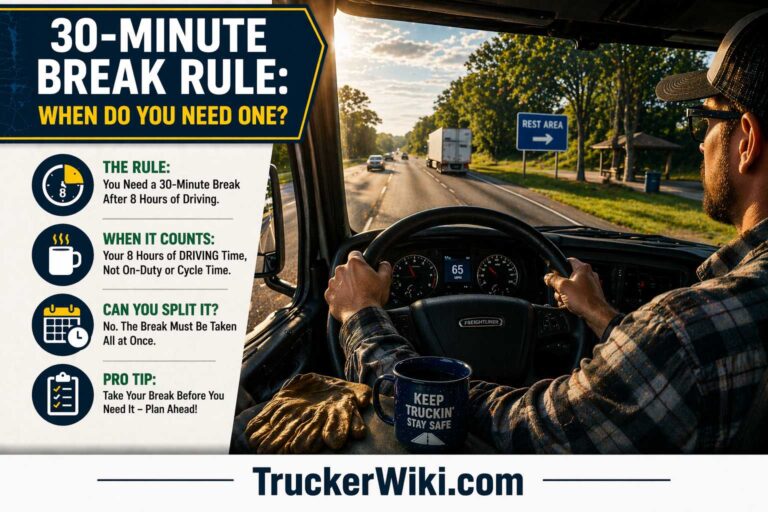
Miss the 30-minute break rule and face a $1,307 fine plus 5 CSA points. Learn exactly when it applies, what qualifies, and who is exempt.
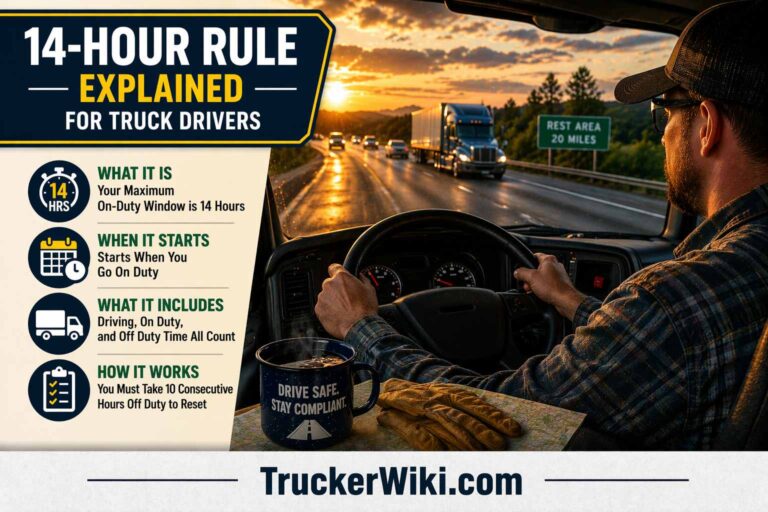
A 14-hour violation adds 7 CSA points and fines up to $7,500. Learn exactly when your clock starts, what counts, and how to stay compliant.
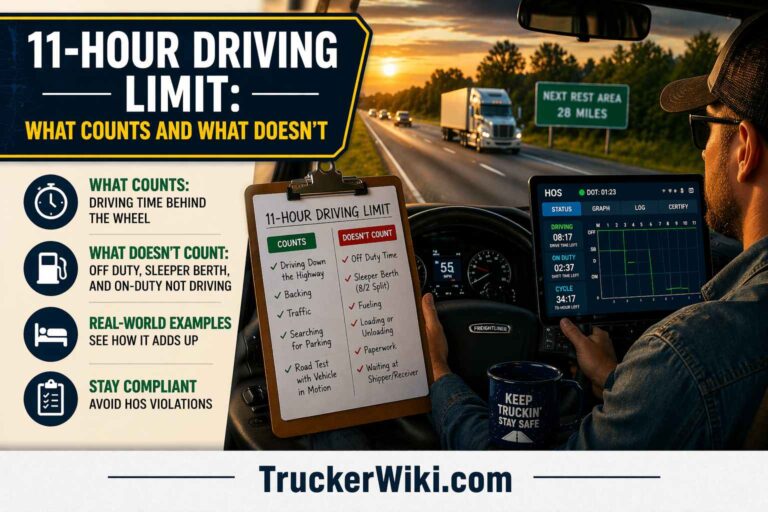
Learn what legally counts toward the 11-hour driving limit, what doesn’t, and what violations cost — fines, CSA points, and OOS risk explained.